The short answer
Is Skoura Oasis worth exploring by bike?
Yes—cycling in Skoura is one of the most rewarding ways to experience its scattered palm groves, earthen lanes and cultivated gardens. A bicycle covers more ground than walking without separating you from the landscape. Most first-time visitors are happiest with a two- to four-hour guided VTT ride; choose an E-bike tour if mixed fitness or extra assistance matters.
A car shows you the road through Skoura. A bicycle reveals the oasis behind it. The memorable part is rarely one dramatic viewpoint: it is the temperature dropping under the palms, a clay wall glowing in a shaft of sun, the sound of water beside a field and the moment a narrow lane opens onto a kasbah. This guide helps you enjoy those moments without overestimating the trail—or treating a living oasis like an open-air sports park.
Why a bike fits Skoura so well
Skoura is a dispersed rural landscape rather than a compact medina. The interesting places sit between gardens, village lanes, palms and earthen buildings. On foot, the connections can feel long; by car, many details disappear behind a window. A bike occupies the useful middle: nimble enough for a quiet turn, slow enough for context.
The Moroccan National Tourist Office presents the wider Ouarzazate–Zagora–Tinghir region through its oases, green valleys and ochre kasbahs. On a Skoura cycling route, those features are not separate attractions. They arrive together, one bend at a time.
A good ride leaves room to stop, listen and change course. Distance is only one measure of value; shade, stories, safe surfaces and respectful access matter more than collecting kilometres.
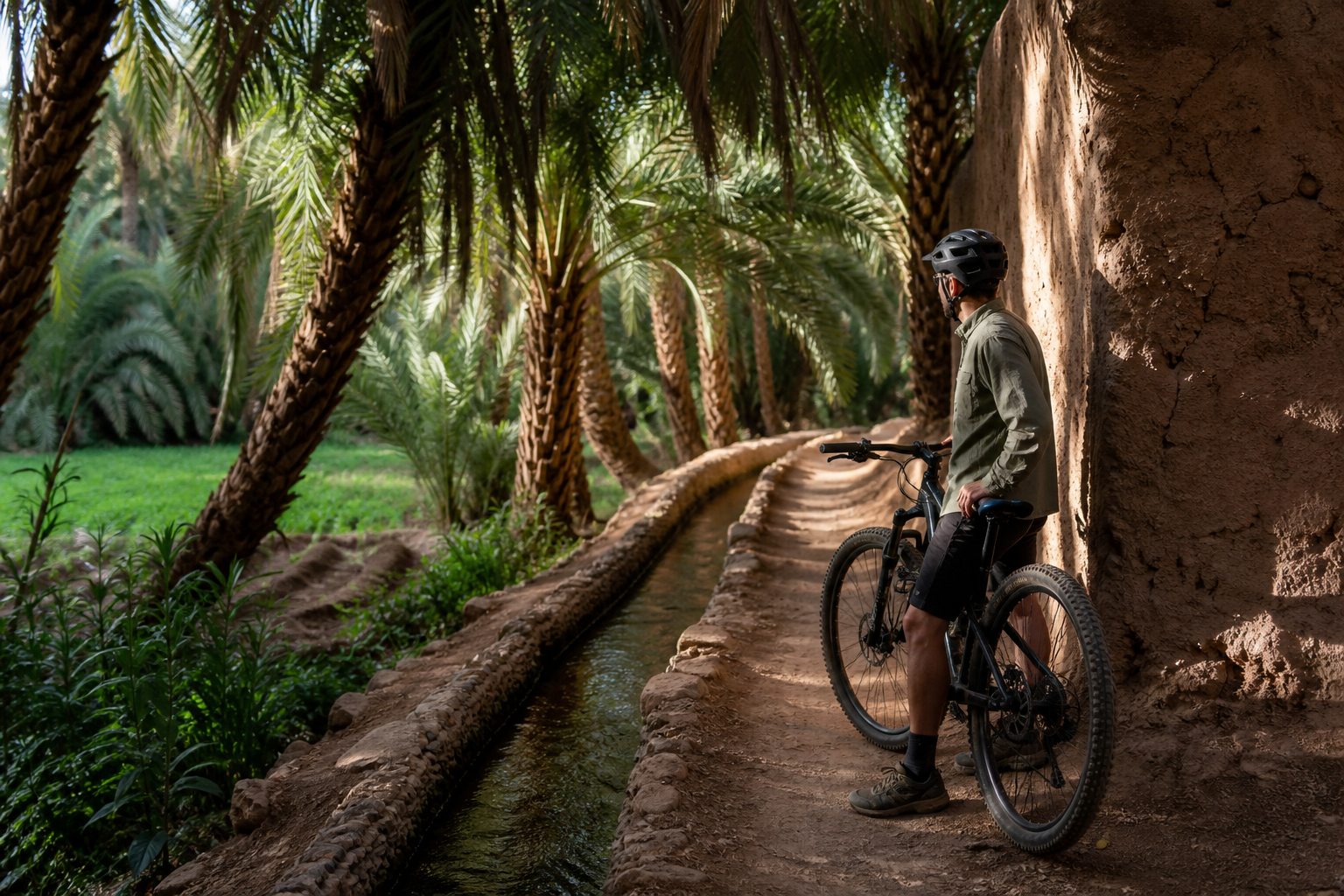
VTT, E-bike or an independent ride?
| Option | Best for | What to expect | Think about |
|---|---|---|---|
| Guided VTT | Active beginners and regular riders | A route adapted to ability, with natural and cultural context | You still pedal on gravel, earth and occasional soft sand |
| Guided E-bike | Mixed-fitness couples, families and relaxed explorers | Assistance on longer links while keeping the feel of a bike ride | Motor help does not replace balance, braking or heat planning |
| Independent ride | Experienced riders with reliable navigation | Freedom to set the pace on clearly public, suitable tracks | Unsigned turns, private plots and changing surfaces make mistakes easy |
If you have not ridden recently, say so. “Beginner” can mean anything from comfortable on a city bike to nervous on loose ground. Honest information lets a local guide choose a kinder first kilometre. Compare all current choices on the Skoura bike tours page.
A half-day Skoura bike tour that breathes
Meet, fit and talk
Confirm helmet fit, saddle height and brakes. Explain your recent riding experience, health considerations and preferred pace before the route begins.
Find a rhythm on wider tracks
Use the first section to practise braking and riding over loose gravel. There is no prize for starting fast.
Enter the quieter palm-grove lanes
Ride between cultivated plots and earthen walls, slowing near homes, animals and blind corners. Stop where the path stays clear.
Pause for architecture or tea
A well-timed cultural stop gives the ride a story. Availability varies, so treat craft or home visits as arrangements, not guaranteed performances.
Return by a different texture
Finish with an easier link when energy allows. Save enough concentration for the final kilometres rather than exhausting the group at the farthest point.
This is a planning pattern, not a fixed itinerary. Route length, stops and access change with weather, trail condition, local activity and the riders. If you have a full day, add a slow lunch and a focused heritage visit instead of simply doubling the distance.
What are Skoura cycling trails really like?
Expect variety. Firm clay can roll quickly, then give way to loose stones, shallow sand, ruts, narrow passages or a short rough patch. Irrigation activity and weather can alter a familiar track. Skoura is not a purpose-built bike park, and that is part of its character.
Wide, firm oasis tracks
Suitable for relaxed riders when dry. Watch for dust, stones and occasional local traffic.
Narrow lanes and mixed surfaces
Require steady braking, line choice and confidence around soft edges or uneven ground.
Longer, sandy or exposed links
Add effort, heat and navigation. These should be chosen for the group, not added for bragging rights.
Walk a short section whenever you feel uncertain. Stepping off is good judgement, not failure. Keep fingers near the brakes, look through turns and leave more space than you would on smooth pavement.
When to cycle in Skoura
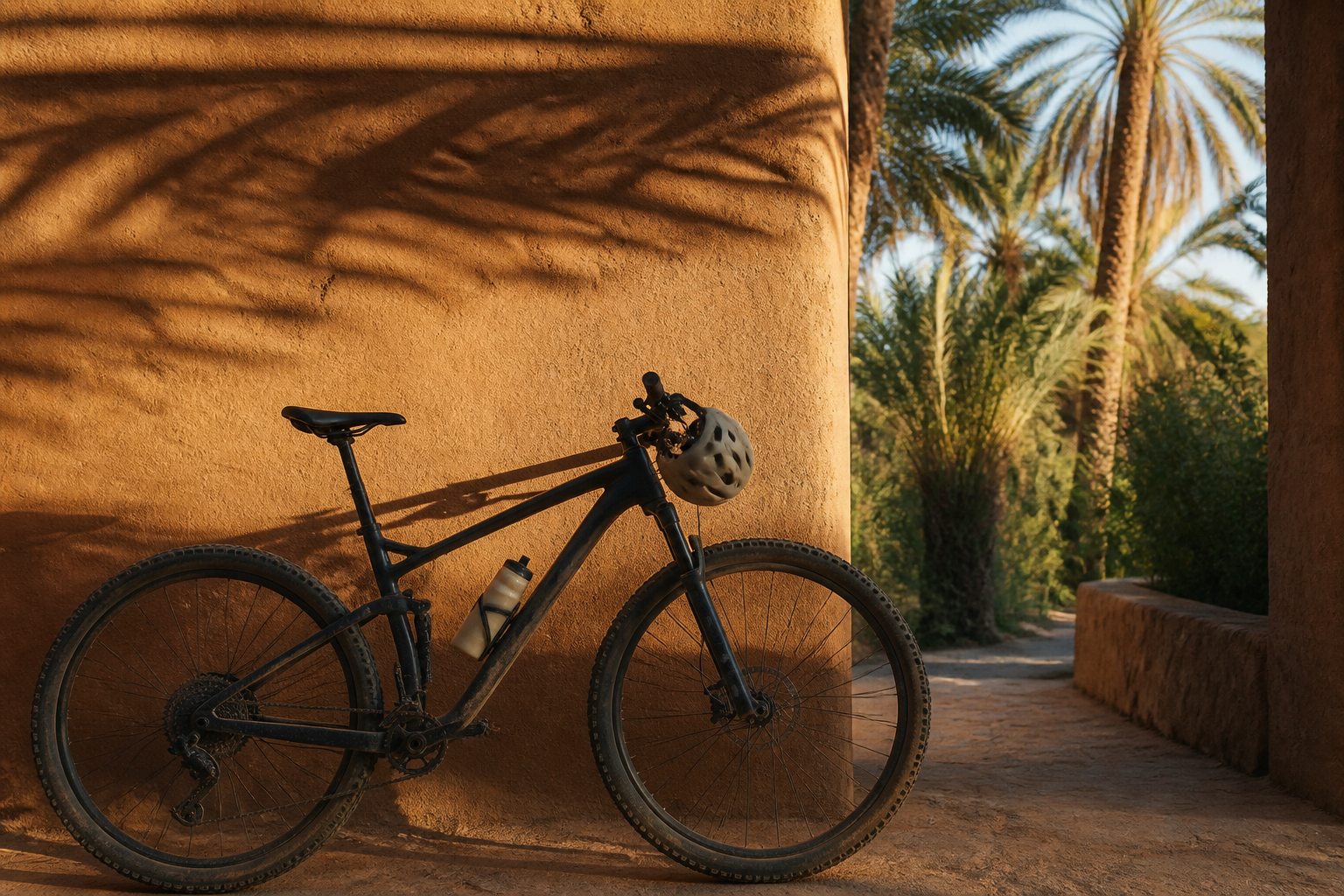
Spring and autumn usually offer the simplest conditions for a longer active morning. Winter can be excellent in daylight, with cold starts and shaded lanes calling for layers. In summer, ride early, shorten the plan and protect the middle of the day for shade and rest. Our complete Skoura seasonal guide explains these trade-offs in detail.
Check a current forecast close to the ride and confirm local trail conditions. Temperature alone does not describe wind, sun exposure, recent rain or how a group will feel on uneven ground.
What to wear and bring
- Closed, secure shoes: choose grip and pedal control over fashion.
- Comfortable fitted clothing: avoid loose fabric near the chain and wheels.
- Water: carry your own refillable bottle even when refreshments are planned.
- Sun protection: use sunscreen and sunglasses; add light coverage in strong sun.
- A seasonal layer: useful for winter shade, wind or a cool early start.
- Small essentials: phone, personal medication and a little cash in a compact bag.
- Respectful camera habits: ask before photographing people, homes or private work.
Confirm what the operator provides before arrival, including helmet, bike type, child equipment and mechanical support. Share rider heights, ages and relevant experience when you send a booking request.
How to ride through a living oasis respectfully
The palm grove is agricultural space, neighbourhood and workplace. Stay on the route your guide indicates; do not enter fields, courtyards or irrigation channels for a photograph. Slow to walking pace near people and animals, greet other track users and move completely aside before stopping.
Earthen walls and buildings are especially vulnerable to careless climbing and repeated contact. UNESCO’s description of nearby Aït-Ben-Haddou’s pre-Saharan earthen architecture explains why traditional earth-and-wood structures require ongoing care. Skoura’s buildings are not the same World Heritage property, but the regional context is a useful reminder: admire with your eyes, not your tyres.
Carry out litter, avoid shortcuts, keep noise low and spend locally when the opportunity is genuine. Responsible riding protects both access and the quiet atmosphere visitors came to experience.
Pair the ride with one meaningful stop
A bike tour already contains many small discoveries. Add one substantial experience rather than three rushed ones: a kasbah visit, arranged tea, a local lunch or a short craft encounter when available. The complete guide to things to do in Skoura helps you choose.
Arriving from the city? Our Ouarzazate-to-Skoura itinerary shows how to build transport, a morning ride and a relaxed afternoon into one realistic day.
Frequently asked
Skoura cycling questions
Is Skoura good for cycling?
Yes. Quiet earthen tracks, palm shade and scattered sights make cycling an excellent way to explore. A local guide helps select appropriate public routes through the dispersed oasis.
Do I need a mountain bike?
A mountain bike is the most versatile choice for gravel, packed earth, shallow sand and uneven passages. Narrow road tyres are not ideal for typical oasis tracks.
Can beginners join a bike tour?
Yes, when the pace and terrain match their confidence. Tell the guide how recently and where you have ridden; being comfortable on pavement is different from being comfortable on gravel.
Is an E-bike effortless?
No. Assistance reduces pedalling effort, but you must still balance, steer and brake on changing surfaces. Timing, hydration and basic bike confidence still matter.
How long should I allow?
Two to three hours is a satisfying introduction. A half day creates room for stops; a full day suits riders who want lunch and heritage context as well as more distance.
Sources and editorial note
- Moroccan National Tourist Office: Ouarzazate–Zagora–Tinghir region
- Moroccan National Tourist Office: nature, oases and valleys
- UNESCO World Heritage Centre: Ksar of Aït-Ben-Haddou and regional earthen architecture
This guide was written from scratch for Skoura VTT Excursions. Practical route advice reflects local operating knowledge; exact access, surfaces and stops can change.
Published and checked 26 August 2026. Confirm weather, availability, equipment and current conditions before setting out.