The short answer
Spring and autumn are the easiest seasons for active days
For most travelers, the best time to visit Skoura is from March to May or from late September to November. Milder conditions usually make cycling and walking easier, and the light is often rewarding. Summer can still work with an early start and a slower plan; winter offers crisp light and comfortable afternoons but asks for warm layers at the beginning and end of the day.
“Best” is personal. A photographer may happily trade a cool morning for clear winter air. A family may value a gentle spring afternoon. A cyclist visiting in summer needs a very different schedule from someone planning tea and a short kasbah visit. Use the seasons below as planning patterns, then check a reliable forecast close to departure.
Skoura seasons at a glance
| Period | What it often feels like | Best approach | Watch for |
|---|---|---|---|
| March–May | Mild to warm days; changeable spring conditions | Longer rides, walks, gardens and photography | Wind, occasional rain, stronger midday sun later in spring |
| June–August | Hot, bright and dry | Early-morning or late-afternoon activity; midday rest | Heat exposure, dehydration and over-ambitious itineraries |
| Late September–November | Warm easing toward mild; softer active-day conditions | Cycling, walking, full-day combinations and late light | Shorter daylight as autumn advances |
| December–February | Cool starts and evenings; often pleasant daytime sun | Layered clothing, midday exploration and clear-light photography | Cold shade, wind and large day-to-night temperature shifts |
These are broad patterns, not a forecast. Local weather varies from year to year and can change quickly.
Spring in Skoura: flexible days and active routes
Spring is a natural fit for visitors who want to spend several hours outside. Conditions are often comfortable enough for a half-day VTT route, an E-bike circuit or a walking tour without arranging the whole day around extreme heat. Cultivated areas can feel lively, while the contrast between palms and surrounding dry land is especially clear.
Early spring may still bring cool mornings or unsettled weather. By late spring the midday sun becomes more demanding. A light layer, sun protection and a flexible start time cover both situations better than relying on one “average” temperature.
Summer in Skoura: go early, simplify the plan
Summer is not automatically a no-go, but it changes the rules. Schedule physical activity as early as practical, keep the route appropriate to the group and carry more water than you think you need. A private excursion is helpful because the start time and pace can be discussed instead of fixed around a large group.
Midday belongs to shade, a long lunch or rest. A second short outing near sunset can be more enjoyable than trying to force one continuous day. Travelers sensitive to heat, young children and anyone with health concerns should be conservative and seek personal medical advice where appropriate.
Distance alone does not measure difficulty. Heat, exposure and recovery time can turn an easy track into the wrong choice. Tell your guide honestly about fitness, age and heat tolerance.
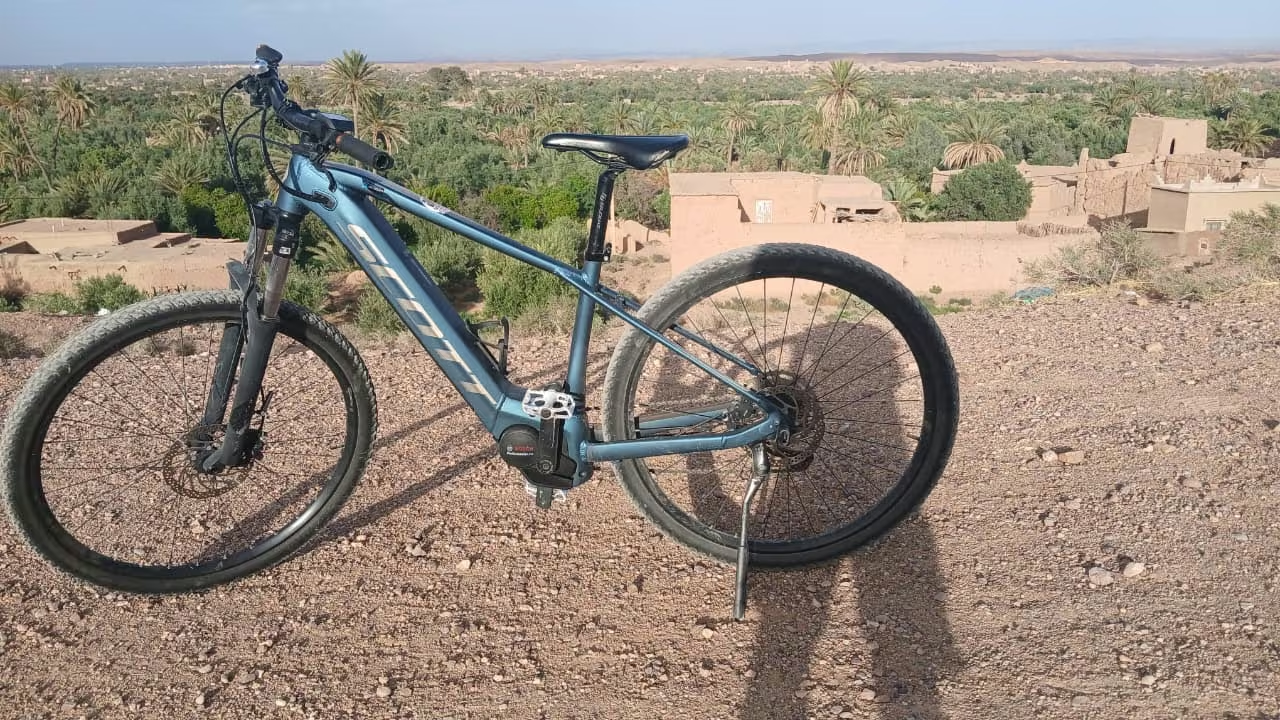
Autumn in Skoura: warm light and easier movement
As the strongest summer heat recedes, the oasis becomes easier to explore for longer. Late September can still be hot, while October and November often suit visitors who want a balanced day: morning activity, lunch, a heritage visit and late-afternoon photography.
Daylight shortens as the season advances, so put the longest ride first and avoid leaving an unfamiliar return route until dusk. If your trip continues toward Dadès or the desert, autumn is also a convenient season for combining outdoor stops across several elevations—while remembering that temperatures can differ sharply between them.
Winter in Skoura: clear days, cold edges
Winter afternoons can be excellent for walking or cycling, especially in the sun. The mistake is dressing only for that afternoon. Starts can feel cold; shaded palm-grove lanes and wind can keep the chill longer; temperatures can drop again after sunset.
Wear removable layers rather than one heavy coat. A wind-resistant outer layer and warmer mid-layer make it easier to adjust between open ground, shade and a tea stop. If rain has recently affected the tracks, ask whether the planned surface is still suitable.
Choose the season by activity
Mountain biking
Spring and autumn give the widest choice of start times. Winter can be pleasant with layers. In summer, choose short or early routes.
See the VTT tour →E-biking
Good across much of the year when timing is sensible. Assistance helps with effort, not with sun exposure or handling uneven ground.
See the E-bike tour →Walking
Winter midday and spring/autumn mornings are comfortable patterns. Summer walks should be short, early and shade-aware.
See the walking tour →Photography
Early and late light is attractive year-round. Winter can give clear air; spring can add fresh greens; autumn offers warm tones.
Find photography ideas →What to pack for Skoura
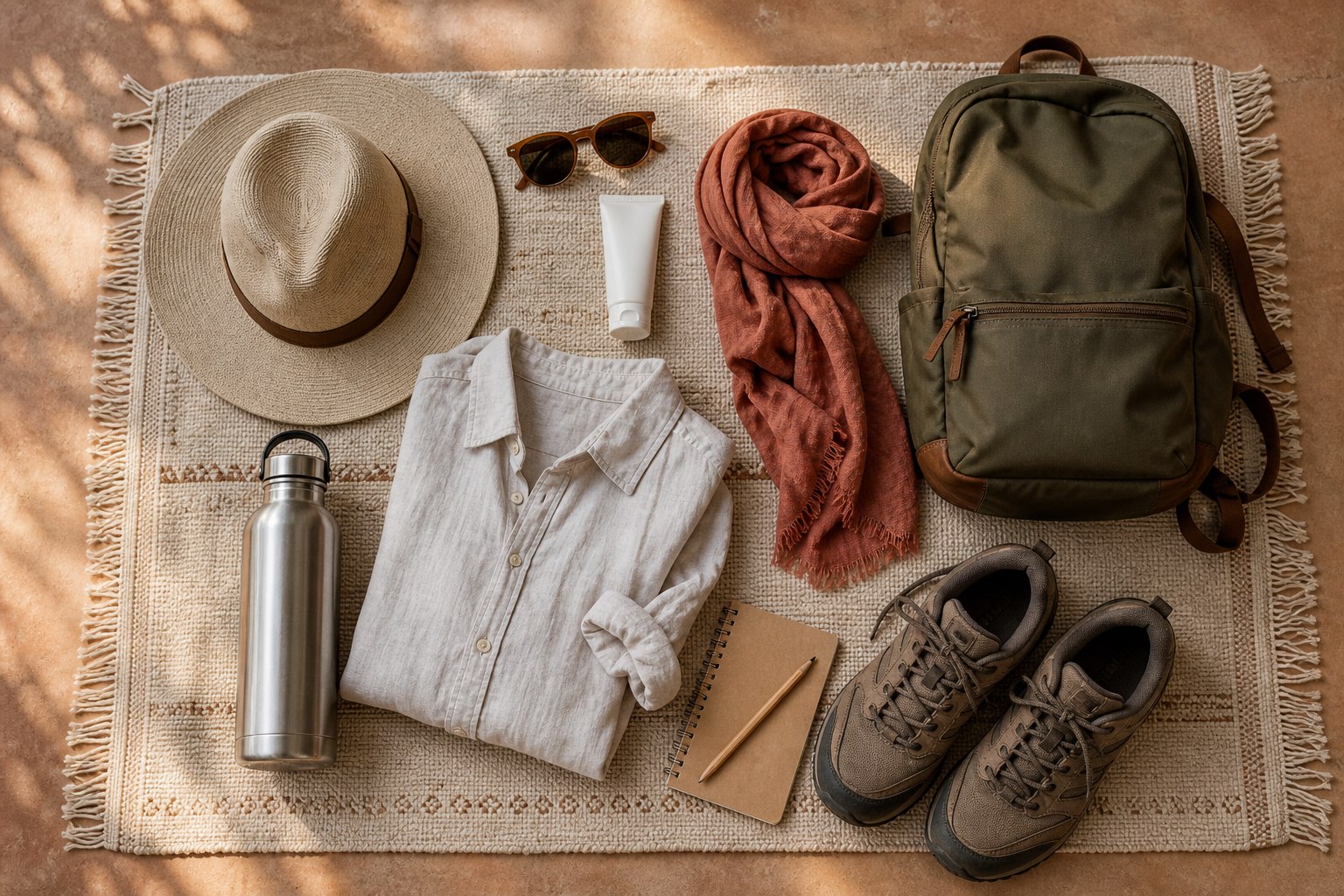
Year-round essentials
- Refillable water bottle
- Sun hat and sunglasses
- Broad-spectrum sunscreen
- Closed shoes with reliable grip
- Small daypack
- Cash in Moroccan dirhams
- Phone with the meeting-point pin saved
Add by season
- Spring: light wind or rain layer
- Summer: breathable long sleeves, extra water and electrolyte plan
- Autumn: light layer for late returns
- Winter: warm mid-layer and wind-resistant outer layer
For cycling, avoid loose fabric near the chain and wear clothing that lets you move comfortably. Helmets and activity equipment should be confirmed with the provider before arrival.
How far ahead should you book?
For a simple visit, a few days may be enough when availability is open. Book earlier for family equipment, larger groups, a specific language, food or craft stops, or dates around busy holiday periods. Whatever the season, share your preferred time rather than only the date.
Use the direct booking form to send the activity, date, group size and notes in one message. The team confirms availability and meeting details on WhatsApp.
Common questions
Skoura weather FAQs
What is the best month to visit Skoura?
April, May, October and November are strong choices for active days because conditions are often milder than midsummer, although weather varies. March and late September can also work well.
Can you visit Skoura in summer?
Yes. Plan outdoor activities for early morning or late afternoon, reduce intensity, carry more water and confirm conditions with your guide. Midday is better for lunch, rest or shaded visits.
Is winter a good time for Skoura?
Winter can bring clear light and comfortable daytime exploration, but mornings, evenings and shaded areas may feel cold. Pack layers and avoid judging the day by the afternoon temperature alone.
Does rain cancel a tour?
Not automatically, but rain and recent runoff can affect earthen or gravel tracks. Contact the guide close to the start time; they may adjust the route, time or activity for safety.
Sources and weather note
Seasonal descriptions are broad planning guidance. Always check a short-range forecast before travel and follow local safety advice.
- WeatherSpark: historical climate patterns for Skoura
- Moroccan National Tourist Office: nature in the Ouarzazate region
Last updated: 14 August 2026.